“This post contains affiliate links, and I will be compensated if you make a purchase after clicking on my links.”
Finding the right Doberman Pinscher puppy adoption center requires research and patience. These intelligent, loyal dogs deserve homes that understand their specific needs.
We at DogingtonPost know that adoption saves lives while giving you a wonderful companion. The process involves identifying reputable organizations, evaluating their standards, and preparing your home for this energetic breed.
Where to Find Doberman Pinscher Rescue Organizations
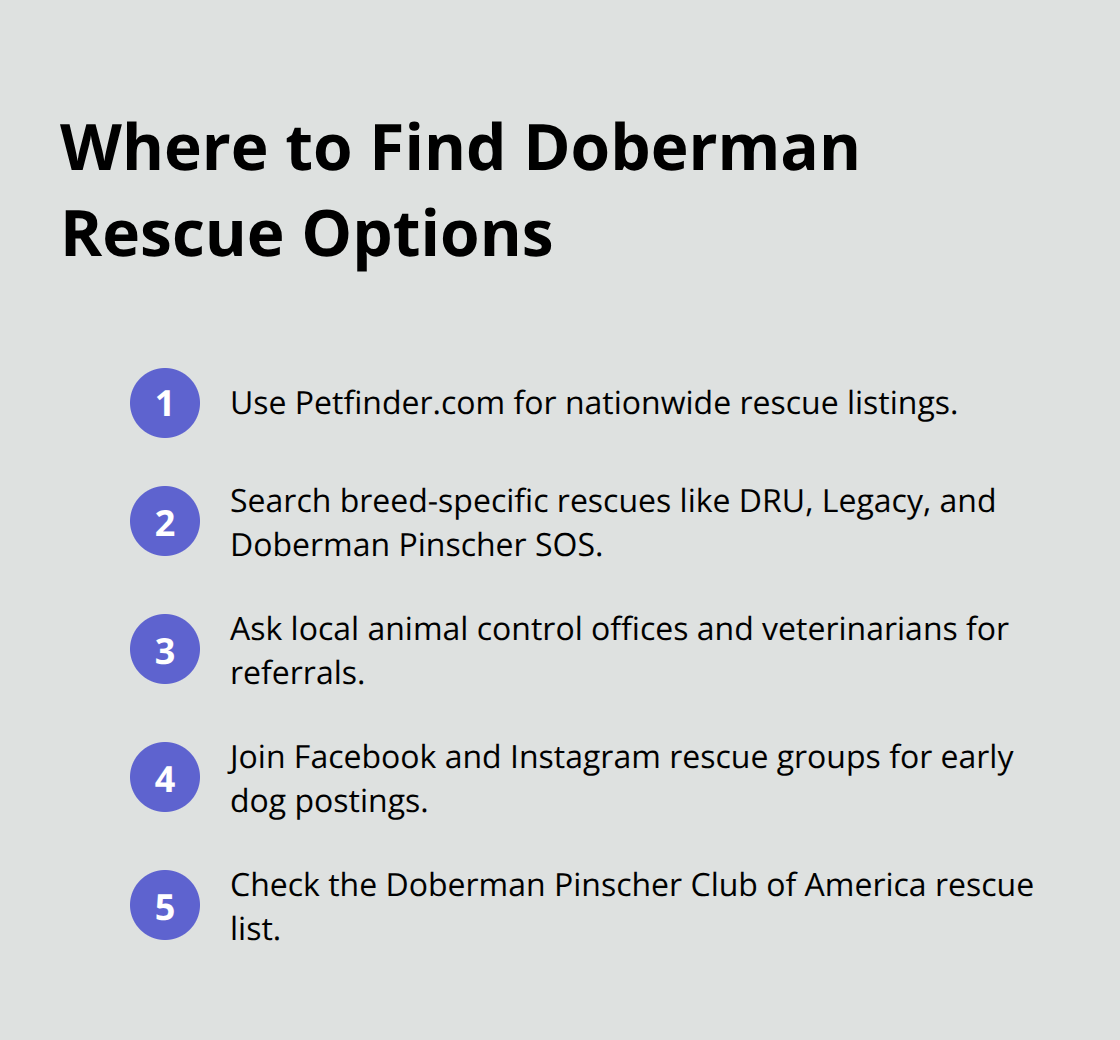
Start with Petfinder.com, which lists over 300,000 adoptable pets nationwide and connects you directly with local shelters and rescue groups. The American Kennel Club reports that 5.8 million dogs and cats entered shelters and rescues in 2024, including many Dobermans that need homes. Search specifically for breed-specific rescues like Doberman Rescue Unlimited, which has placed nearly 3,000 dogs since 1988, or Legacy Doberman Rescue and Doberman Pinscher SOS. These organizations maintain detailed knowledge about the breed and typically house 30+ adoptable Dobermans at any time.
Contact Your Local Animal Control and Veterinarians
Local animal control offices and veterinary clinics serve as excellent referral sources for reputable Doberman rescues in your area. The Doberman Pinscher Club of America maintains a Code of Ethics for rescue groups, and veterinarians often know which organizations meet these standards. Contact three to five veterinary practices in your region and ask for their rescue recommendations. Many veterinarians work directly with rescue groups and can provide firsthand knowledge about their operations and dog care quality.
Use Social Media and Regional Networks
Facebook groups dedicated to Doberman rescue often share available dogs and connect adopters with regional organizations. Search for terms like “Doberman Rescue” plus your state name to find active groups. Research shows that social media platforms like Facebook and Instagram are transforming animal adoption rates and spreading awareness about rescue pets. Join multiple groups and follow rescue organizations on Instagram to see real-time updates about available dogs. Many rescues post dogs on social media before they update their websites (which gives you earlier access to adoption opportunities).
Check Breed Club Resources
The Doberman Pinscher Club of America provides a comprehensive list of rescue organizations that follow their ethical standards. Regional breed clubs often maintain their own rescue networks and can direct you to local volunteers who foster Dobermans. These clubs host events where you can meet rescue representatives and learn about available dogs. Club members typically have extensive experience with the breed and can offer valuable insights about temperament and care requirements (making them excellent resources for first-time Doberman owners).
Once you identify potential rescue organizations, you’ll need to evaluate their standards and practices to find the most reputable adoption centers.
What to Look for in a Reputable Adoption Center
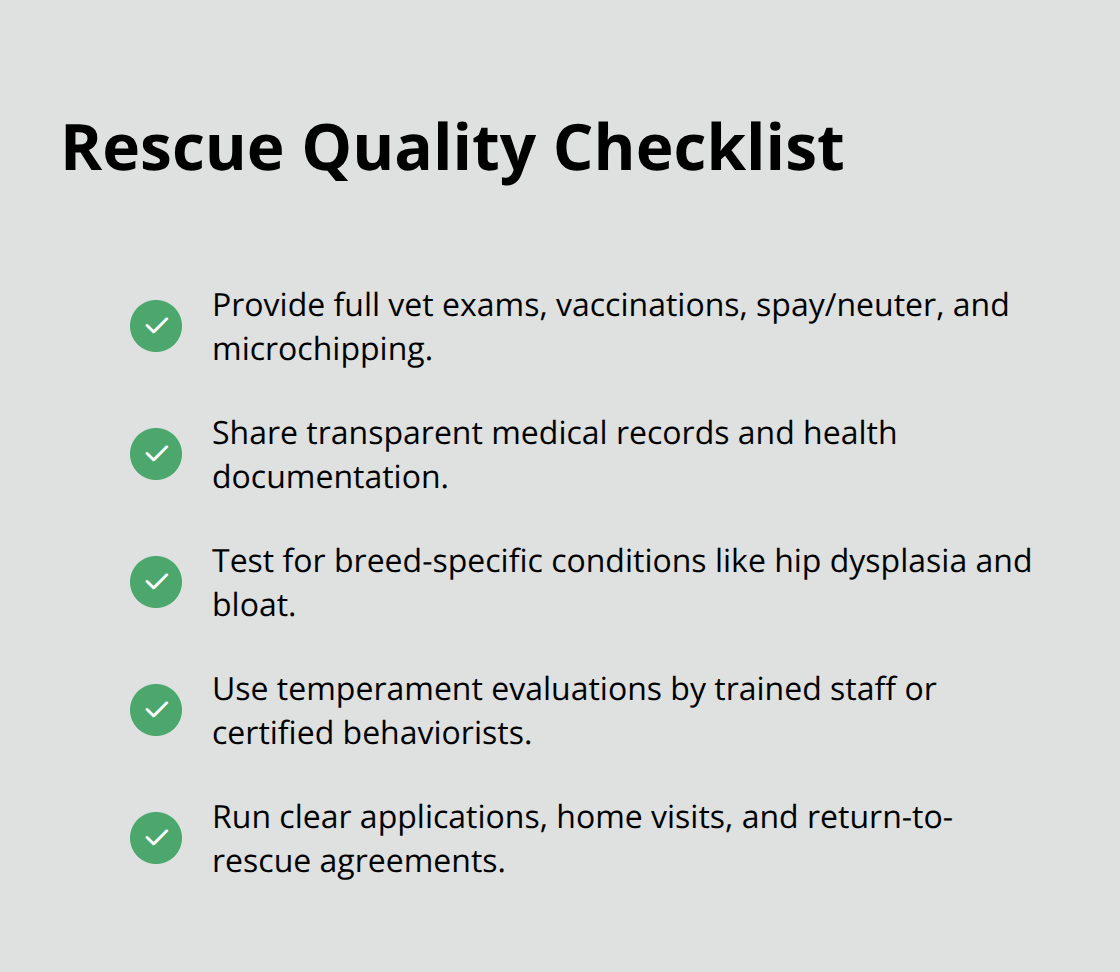
Reputable adoption centers perform comprehensive health screenings that include full veterinary examinations, vaccinations, spaying or neutering, and microchipping before placement. Doberman Rescue Unlimited conducts complete medical exams on every dog and maintains detailed health records for potential adopters. Ask centers about their veterinary partnerships and request to see health documentation. Quality organizations also test for breed-specific conditions like hip dysplasia and bloat that affect Dobermans. The center should provide written health guarantees and offer post-adoption veterinary support.
Health Documentation Standards
Legitimate centers maintain transparent medical records and provide adopters with vaccination histories, spay/neuter certificates, and microchip information. They partner with licensed veterinarians and follow standardized health protocols. Centers that refuse to show health records or provide vague medical information raise red flags. Quality organizations typically spend $500-800 per dog on medical care before adoption (which explains adoption fees between $250-600).
Ask about their veterinary partnerships and request contact information for their primary veterinarian.
Behavioral Assessment Protocols
Professional adoption centers conduct temperament evaluations to match dogs with appropriate families. They assess each Doberman’s energy level, socialization needs, and compatibility with children or other pets. Centers should provide detailed behavioral profiles and honestly discuss any training requirements or behavioral challenges. Quality organizations often use experienced volunteers or certified behaviorists for these assessments. Avoid centers that make unrealistic claims about dog temperaments or refuse to discuss behavioral evaluations (these practices indicate poor standards). The adoption process should include opportunities to interact with dogs multiple times before you finalize placement decisions.
Transparent Adoption Processes
Top-tier adoption centers maintain clear application procedures and conduct home visits to verify suitable environments for Dobermans. They require detailed applications that assess your experience with large breeds and living situation. Quality rescues like DRU reserve the right to refuse applications when home situations prove incompatible with Doberman needs. Staff members should answer questions about their policies and explain their selection criteria. Centers should also require return agreements that mandate dogs come back to the organization if adoption fails.
Once you identify centers that meet these quality standards, you’ll need to prepare your home and lifestyle for successful Doberman ownership.
Preparing for Doberman Pinscher Adoption
Dobermans need 1-2 hours of daily exercise and mental stimulation, which makes them unsuitable for sedentary households. The American Kennel Club data shows these dogs require structured physical activity that includes long walks, jogging, or agility training to prevent destructive behavior. Install a 6-foot fence minimum around your yard since Dobermans can easily clear lower barriers. Remove toxic plants like azaleas and lilies, secure loose electrical cords, and install childproof latches on cabinets that contain cleaning supplies. Purchase heavy-duty food and water bowls since adult Dobermans weigh 65-90 pounds and can easily tip lightweight dishes.
Exercise and Training Space Setup
Create dedicated training areas inside and outside your home where you can work on obedience commands daily. Dobermans rank among the most intelligent breeds but require consistent mental challenges to prevent boredom-related destruction. Set up puzzle toys, treat-dispensing balls, and rotating toy schedules to keep their minds engaged. Budget $200-300 for initial training equipment that includes a sturdy leash, training treats, and interactive toys. Professional training costs average $150-300 per session, and most Doberman puppies need 8-12 sessions for basic obedience.
Financial Planning for Ownership
Basic veterinary care costs $200-400 annually for routine check-ups, vaccinations, and preventative treatments. Large breed puppy food costs $80-120 monthly, and quality nutrition prevents joint problems common in this breed. Plan $500-800 annually for routine veterinary care that includes vaccinations, heartworm prevention, and dental cleanings.
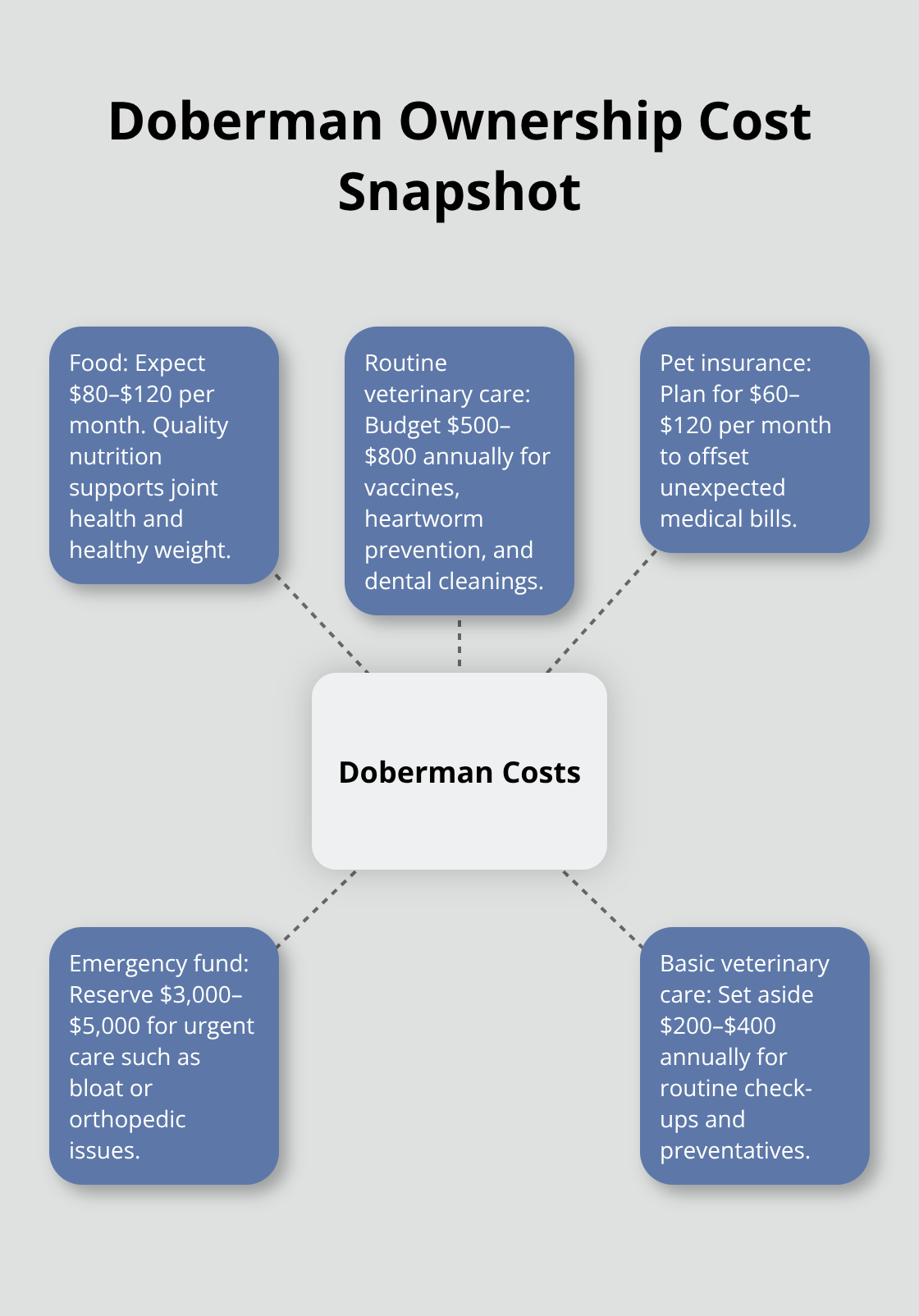
Emergency veterinary funds should total $3,000-5,000 since Dobermans face breed-specific health risks like bloat and hip dysplasia that require immediate expensive treatment. Pet insurance premiums range $60-120 monthly for comprehensive coverage (which helps offset unexpected medical costs).
Home Safety Modifications
Secure all potential hazards before your Doberman arrives home. Lock away medications, chemicals, and small objects that pose choking risks. Install baby gates to restrict access to certain rooms during initial training periods. Check that all windows have secure screens since curious puppies may attempt to jump through open windows. Store shoes, clothing, and valuable items in closed closets because Doberman puppies explore their environment through chewing and can destroy personal belongings quickly.
Final Thoughts
Quality Doberman Pinscher puppy adoption centers provide comprehensive health screenings, behavioral assessments, and transparent processes that protect both dogs and families. Adoption saves lives while you avoid puppy mill practices that harm dogs. Adoption fees typically cover vaccinations, spaying or neutering, and microchipping (providing immediate value compared to breeder purchases).
The National Council on Pet Population Study estimates that 3-4 million dogs enter shelters annually, which makes adoption a powerful way to reduce overpopulation. Complete applications at multiple rescue organizations, schedule home visits, and prepare your space for a high-energy breed. Budget $1,000 annually for care and establish veterinary relationships before you bring your Doberman home.
We at DogingtonPost provide comprehensive resources for responsible dog owners throughout their adoption journey. Visit DogingtonPost for expert guidance and ongoing support as you navigate Doberman Pinscher puppy adoption. Our team stands ready to help you succeed with your new companion.