“This post contains affiliate links, and I will be compensated if you make a purchase after clicking on my links.”
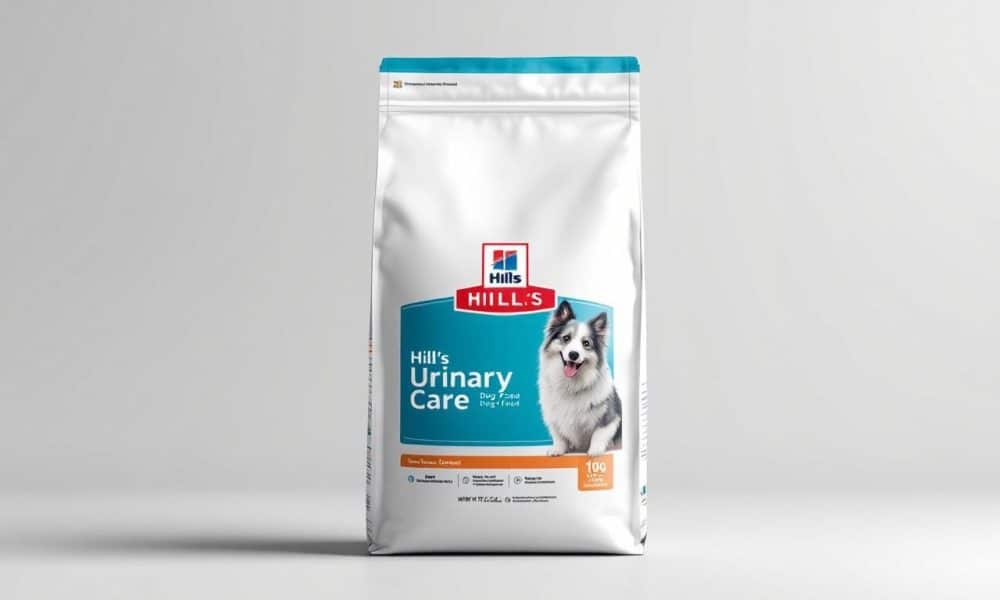
Urinary tract issues affect roughly 14% of dogs at some point in their lives, making proper nutrition a real concern for pet owners. Hills Urinary Care dog food is specifically formulated to address these health challenges with targeted ingredients and clinical backing.
At DogingtonPost, we’ve put together this guide to help you understand how this specialized diet works and whether it’s the right choice for your dog.
What Hills Urinary Care Actually Contains
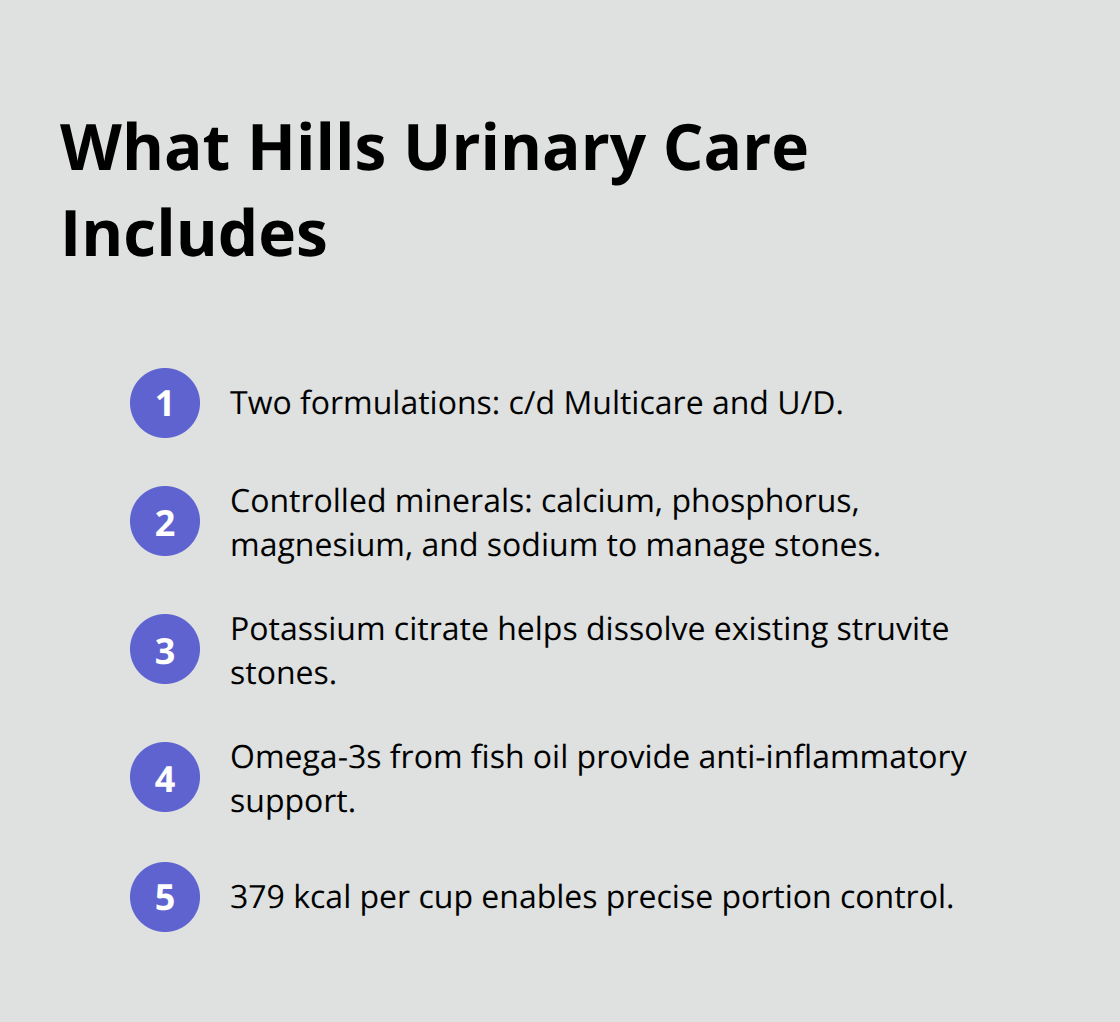
Hills Urinary Care comes in two main formulations: c/d Multicare and U/D, each with a specific mineral profile that prevents bladder stone formation. The c/d Multicare formula contains approximately 22.3% protein, 17.2% fat, and controlled mineral levels with calcium at 0.63%, phosphorus at 0.57%, magnesium at 0.1%, and sodium at 0.25%. The U/D formula takes a more aggressive approach with even lower mineral content across the board. The primary ingredients in both versions include chicken meal, whole grain corn, brewer’s rice, and chicken fat, with added fish oil for omega-3 support and potassium citrate to help dissolve existing struvite stones. The caloric density sits at 379 kcal per cup, which matters when you calculate portions for weight management-a critical factor since overweight dogs face higher urinary issues. Hills manufactures these formulas in the USA using both domestic and imported ingredients, with each batch tested under AAFCO procedures to verify complete and balanced nutrition for adult dogs.
The Mineral Balance That Stops Stone Formation
The real power of Hills Urinary Care lies in its mineral restriction, particularly magnesium and phosphorus, which form the building blocks of struvite crystals and stones. Hills engineered the c/d Multicare formula to dissolve existing struvite stones within 4 to 6 weeks while simultaneously lowering the risk of calcium oxalate stone formation-a dual benefit most competitors don’t achieve. The added potassium citrate actively supports your dog’s urine chemistry, making the urinary environment hostile to crystal formation. Omega-3 fatty acids from the fish oil provide anti-inflammatory support, which matters because inflammation in the urinary tract often precedes stone formation.
Why Veterinarians Recommend This Formula
Veterinarians have recommended Hills as the number-one brand in the United States for urinary health management, and owners report measurable improvements in crystalluria within weeks of switching. This isn’t theoretical nutrition-real dogs show real results when their owners stick with the formula consistently. The formula works best for adult dogs and isn’t suitable for puppies or pregnant dogs, so age matters when making this choice.
Understanding What Your Dog Actually Needs
Different dogs respond to urinary care diets at different rates, which is why monitoring your dog’s individual response becomes essential once you switch. Some dogs show crystal reduction within the first month, while others take longer to respond to the mineral adjustments. The next section covers exactly how to transition your dog to this food and what signs to watch for as the diet takes effect.
Does Hills Urinary Care Actually Work
Hills Urinary Care delivers measurable results because it fundamentally alters your dog’s urine chemistry rather than relying on vague wellness promises. Real owners report that struvite crystals disappear when dogs consistently eat the c/d Multicare formula, and the formula simultaneously lowers calcium oxalate stone risk, which matters because many dogs face both stone types. Veterinarians rank Hills as the number-one recommended brand in the United States for urinary health management, and this ranking exists because clinical data backs the formula. The c/d Multicare version dissolves existing struvite stones while the U/D formula takes a more aggressive mineral-restriction approach for dogs with severe crystal histories. What separates Hills from competitor options is the potassium citrate and controlled magnesium levels, which actively reshape urine pH and mineral concentration to prevent crystal formation rather than simply claiming to support urinary health. When your dog switches to this diet, you apply a formula tested under AAFCO procedures with documented outcomes from thousands of dogs.
How Long Before You See Results
Most owners notice changes within the first month, though some dogs take 6 to 8 weeks to fully respond depending on the severity of their condition and individual metabolism. Dogs that had surgery to remove bladder stones benefit most from lifelong Hills Urinary Care feeding because recurrence rates drop significantly when mineral intake stays controlled, and your veterinarian will likely recommend this diet for the rest of your dog’s life after a surgical intervention. Weight management directly impacts urinary health outcomes, so if your dog gains weight on the formula, you must adjust portions downward because obesity increases urinary tract problems regardless of diet quality. Dalmatians and other stone-prone breeds show particularly strong responses to Hills Urinary Care, which is why breed history matters when evaluating whether this food fits your dog’s needs.
The Role of Water and Veterinary Monitoring
The formula works best when paired with consistent access to fresh water and regular veterinary check-ups to monitor crystal levels through urinalysis, because diet alone cannot overcome severe underlying urinary conditions that require medication or surgical intervention. Your veterinarian tracks your dog’s progress through urine tests, which reveal whether the mineral adjustments are actually working for your individual dog. Fresh water availability matters as much as the food itself-hydration directly influences urine concentration and crystal formation risk.
When This Diet Falls Short
Hills Urinary Care won’t solve urinary problems caused by bacterial infections, anatomical abnormalities, or genetic kidney disease, which is why veterinary diagnosis comes before dietary changes. Some owners report their dogs dislike the taste or experience weight gain they struggle to manage, making strict portion control and potential food adjustments necessary within the first few weeks. If your dog shows no improvement after 8 weeks on the formula despite consistent feeding and adequate water intake, your veterinarian may recommend additional diagnostics or medication alongside the diet, because some dogs require pharmaceutical intervention to manage crystals effectively.
Moving Forward With Feeding Decisions
Understanding whether Hills Urinary Care works for your dog requires honest assessment of your dog’s response over the first two months. Your veterinarian’s input throughout this period shapes whether you continue with this formula long-term or explore alternative approaches. The next section covers exactly how to transition your dog to this food and what signs to watch for as the diet takes effect.
Feeding Guidelines and Practical Tips
The feeding chart on Hills Urinary Care packaging provides weight-based guidelines, but these numbers serve as starting points, not fixed rules. A 5-pound dog needs roughly half a cup daily, while a 50-pound dog requires about 3 cups, and a 100-pound dog needs 5 and a quarter cups per day. Individual metabolism varies significantly, which means your dog might need 10-15% more or less than the chart suggests depending on age, activity level, and current weight. The 379 calories per cup matters here because you can calculate exact daily intake rather than guessing. Weigh your dog every two weeks during the first two months on Hills Urinary Care, because weight gain indicates you’re overfeeding, and obesity directly worsens urinary health outcomes. If your dog gains weight despite following the chart, reduce portions by a quarter cup and monitor again in two weeks.
Transition Your Dog Correctly to Avoid Digestive Problems
Hills recommends a gradual 7-day transition when switching to this food, moving from 75% old food and 25% new food on day one, down to 25% old food and 75% new food by day six. This slow approach prevents digestive upset and allows your dog’s system to adjust to the new mineral profile.

Some owners skip this transition period and feed Hills Urinary Care immediately, which often causes vomiting or diarrhea within 24-48 hours. Others try mixing the new food with the old food for only 2-3 days, which still causes problems in sensitive dogs. The full 7-day transition costs an extra few dollars in wasted food, but prevents veterinary visits for digestive issues that cost significantly more.
Many owners underestimate portion sizes or add treats without adjusting meals accordingly, which undermines the formula’s mineral-control benefits. Track your dog’s weight and adjust portions downward if weight gain occurs, since obesity directly impacts urinary health outcomes regardless of diet quality.
Hydration Determines Success as Much as Food Choice
Fresh water availability ranks equally with the food itself in managing urinary health, because dehydration concentrates urine minerals and accelerates crystal formation. Your dog should have constant access to water throughout the day and night, not just during meals. Some owners report their dogs drink more water after switching to Hills Urinary Care, which indicates the formula is working to dilute urine naturally. If your dog seems to drink less than before, add water to the kibble by soaking it for 5-10 minutes before serving, which increases hydration and improves palatability for picky eaters.
Monitor Urination Patterns and Veterinary Progress
Track your dog’s urination frequency during the first month on the new food, because increased bathroom trips often signal that the formula is working to flush minerals from the system. Some dogs initially urinate more frequently as the diet takes effect, then normalize after 3-4 weeks. Decreased urination or straining during bathroom visits signals a problem and requires immediate veterinary attention. Your veterinarian should perform urinalysis at the 4-week mark and again at 8 weeks to verify that crystal levels are actually dropping, because visual improvements in your dog’s behavior don’t always correlate with actual mineral reduction in the urine. If your dog shows no crystal improvement after 8 weeks despite consistent feeding and adequate water, your veterinarian may recommend adding medication or investigating underlying conditions like kidney disease or anatomical blockages that food alone cannot resolve.
Final Thoughts
Hills Urinary Care dog food works because it fundamentally addresses the mineral imbalances that cause bladder stones and crystals through controlled magnesium, phosphorus, and calcium levels paired with potassium citrate. Most owners observe measurable improvements within the first month, though some dogs require 6 to 8 weeks to fully respond depending on their individual metabolism and stone severity. Success depends equally on three factors: consistent feeding at proper portions, constant access to fresh water, and regular veterinary monitoring through urinalysis.

Your veterinarian should perform urinalysis at the 4-week and 8-week marks to verify that crystal levels actually drop. If your dog shows no improvement after 8 weeks despite consistent feeding and adequate water intake, your veterinarian may recommend additional diagnostics or medication because some dogs require pharmaceutical intervention alongside dietary changes. Contact your veterinarian immediately if your dog shows straining during urination, blood in urine, or decreased bathroom frequency, as these signs indicate a problem requiring urgent attention.
Weight gain undermines the formula’s benefits, so adjust portions downward if your dog gains weight despite following the feeding chart. Hydration matters as much as the food itself because dehydration concentrates urine minerals and accelerates crystal formation. For ongoing guidance on nutrition and dog health, we at DogingtonPost provide practical care tips and expert advice to support responsible dog ownership.