“This post contains affiliate links, and I will be compensated if you make a purchase after clicking on my links.”
Finding the right Lhasa Apso puppy adoption center requires knowing where to look and what to evaluate. We at DogingtonPost want to help you navigate this process with confidence.
This guide walks you through reputable adoption sources, how to assess breeders and shelters, and what you need to prepare before bringing your puppy home.
Where to Find Lhasa Apso Puppies
Start with Local Rescues and Shelters
Local animal shelters and breed-specific rescues should be your first stop, not your last resort. Lhasa Happy Homes in Santa Monica operates bi-monthly adoption events on the 2nd and 4th Sundays from 11am to 2:30pm at 2116 Main Street, where you can meet dogs in person before committing. Their adoption fees start at $400 minimum and cover vet exams, vaccinations, spay/neuter, grooming, microchipping, and de-worming. This costs substantially less than breeders-Crockett Pups in South Carolina charges around $2,300 for puppies, with prices ranging from $1,800 to $2,800 depending on coat color. What matters most is that rescue organizations temperament-test their dogs in real home environments, giving you honest insights about behavior with kids and other dogs.
Prepare for the Adoption Event
When you attend an adoption event, bring photos or video of your home and yard, and bring your current dogs if you have any-the organization may involve them in the final decision. This preparation helps the rescue staff match you with a dog that fits your household rather than guessing based on a brief meeting. You’ll gain a clearer picture of how a puppy behaves around your existing pets and in spaces similar to your own.
Use Online Databases to Expand Your Search
Online adoption databases let you search for Lhasa Apsos in your area and filter by age, size, and location, though the quality of listings varies significantly. The application process typically takes 24 to 48 hours for email responses and up to 48 hours for phone calls, so don’t expect instant answers. Most rescues require a home visit before finalizing adoption, and some offer virtual visits if needed.
Understand Adoption Fees and Requirements
Adoption fees vary based on age, training, and medical needs-senior dogs usually cost less. When evaluating any center, confirm that adoption packages include spay/neuter, vaccines, and microchipping as standard. Reputable organizations won’t ship dogs out of state; if you’re adopting from a distance, you’ll need to visit in person for the meeting and home assessment. This requirement exists for good reason (it protects the dog and ensures the match is genuine rather than impulsive). Once you’ve identified a rescue that aligns with your values and location, the next step involves assessing the facility itself and understanding what questions to ask before making your final decision.
How to Spot a Trustworthy Adoption Center or Breeder
Check How Long They’ve Been Operating
Not all adoption centers and breeders operate with the same standards, and the difference between a reputable source and a problematic one can mean thousands of dollars wasted or a puppy with serious health issues. Start by checking whether the organization has been operating for several years-Crockett Pups has been in business since 2011, which signals stability and accountability. Ask for references from previous adopters and actually contact them; a breeder or rescue unwilling to provide names should raise immediate red flags.
Assess the Facility and Animal Care Conditions
Visit the facility in person and observe how dogs are housed and handled. Lhasa Happy Homes keeps dogs in foster homes or daycare rather than kennels, which tells you the dogs experience real home environments before adoption. During your visit, watch for cleanliness, proper spacing, and how staff interact with animals. Ask specific questions about health testing for genetic conditions common in Lhasa Apsos, such as hip dysplasia and eye problems. A reputable breeder will have veterinary documentation proving their breeding dogs have been tested.
Review Health guarantees and deposit policies
Request a written health guarantee that specifies what conditions are covered and for how long. Crockett Pups requires a $300 deposit, which is fully refundable minus a 9% processing fee if you change your mind within 24 hours-this flexibility suggests confidence in their puppies and fairness to buyers. Conversely, any breeder with non-refundable deposits or vague cancellation policies should concern you. If a breeder’s pricing seems unusually low or they pressure you to decide quickly, walk away.
Understand Home Visits and Post-Adoption Support
The home visit requirement matters more than many people realize. Lhasa Happy Homes conducts home visits before finalizing adoptions to assess whether your living space suits the dog’s needs, and they won’t consider families with children under 5 unless the dog has proven good with young kids. This screening protects the animal and reduces returns. Ask the organization whether they offer post-adoption support-reputable rescues answer questions about training, grooming, and veterinary care after you bring your puppy home.
Compare Pricing and What Fees Cover
Confirm that adoption fees cover essential services like spay/neuter, vaccines, microchipping, and deworming. Lhasa Apso puppies typically cost between $1,800 and $2,800 from established breeders depending on coat color, while rescue adoption fees start around $400 and cover substantial medical and care expenses. The price difference reflects the breeder’s overhead and the rescue’s limited funding, but both should be transparent about where your money goes. Once you’ve selected a trustworthy source, your attention shifts to preparing your home to welcome your new puppy and meet the breed’s specific needs.
Preparing Your Home for a Lhasa Apso Puppy
Stock Essential Grooming Supplies
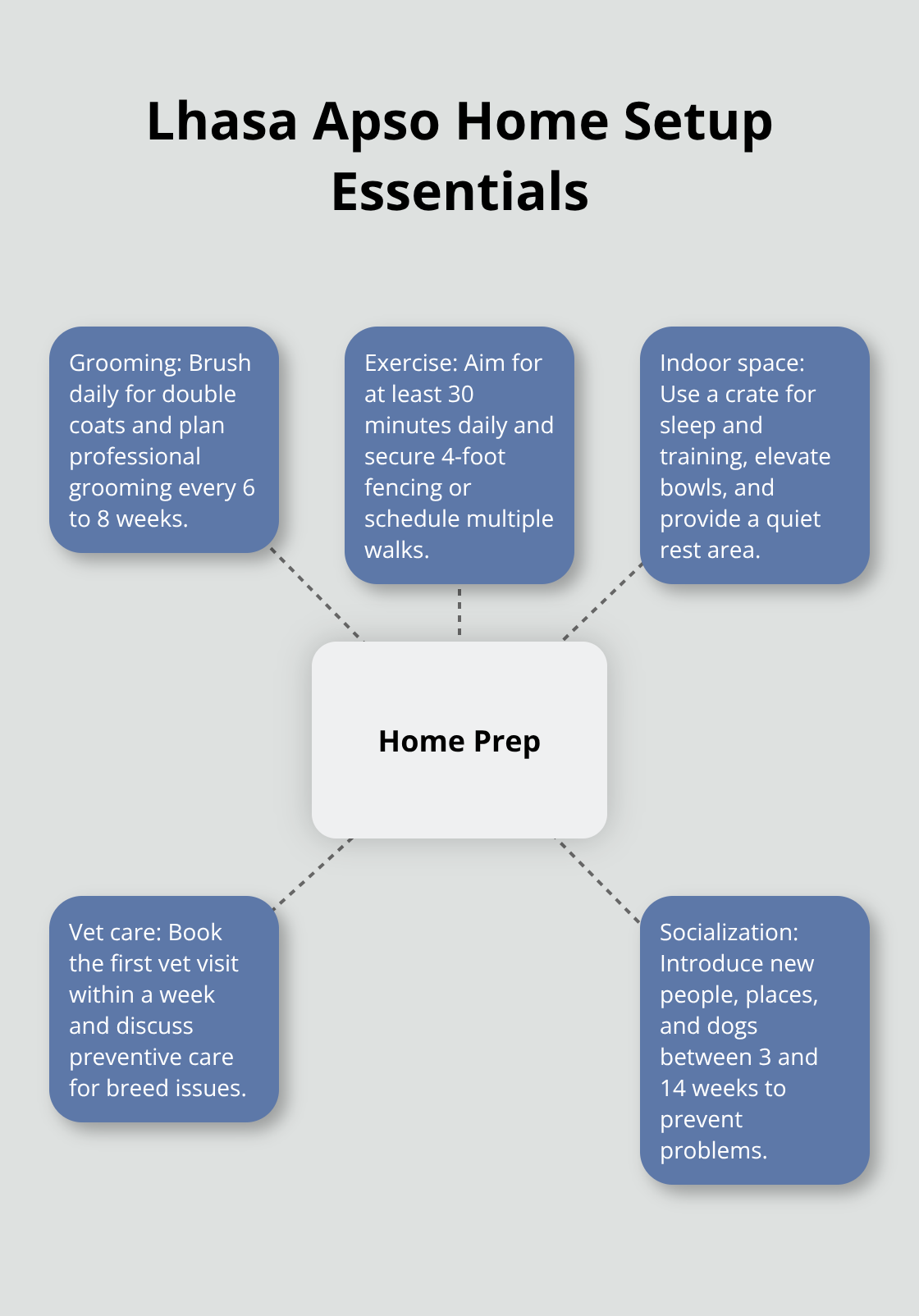
Lhasa Apsos require serious grooming attention from day one, and skipping this preparation creates unnecessary stress for both you and your puppy. Purchase a slicker brush, metal comb, and mat splitter specifically designed for double coats. Their dense double coat demands daily brushing to avoid tangles and mats, so you’ll need to brush them frequently to prevent tangles. Budget for professional grooming every 6 to 8 weeks depending on your location, as many owners underestimate these expenses and end up with matted coats requiring expensive remedial work.
Set up a designated grooming area in your home where your puppy learns to tolerate handling early. Stock dog-safe shampoo formulated for long coats, nail clippers rated for small breeds, and a grooming table to make the process easier on your back and the dog’s comfort.
Create a Safe Exercise Environment
Lhasa Apsos need adequate exercise despite their small size. Petfinder reports that daily outdoor time and mental stimulation keep them happy, so try for at least 30 minutes of activity daily. Create a secure yard with fencing at least 4 feet high since they’re escape artists and will chase small animals. If you lack yard space, commit to multiple daily walks and indoor play sessions with puzzle toys and training games.
Set Up Your Indoor Space
Inside your home, designate a puppy area with a crate for sleeping and house training, food and water bowls elevated to reduce neck strain, and a bed or mat in a quiet corner away from foot traffic. Lhasa Apsos adapt well to small spaces and urban living according to Petfinder, making them suitable for apartments if you provide adequate exercise. Stock your home with age-appropriate toys that encourage chewing and mental engagement without posing choking hazards. These dogs are independent and bold yet sensitive, so avoid chaotic households with constant noise and activity.
Establish Veterinary Care and Health Planning
Establish a veterinary relationship before your puppy arrives by scheduling a first appointment within the first week to establish baseline health records and discuss vaccination schedules. Ask your vet about preventive care for common Lhasa Apso health issues like hip dysplasia and eye problems. This early connection helps you catch potential issues before they become serious.
Prepare for Their Temperament and Socialization Needs
Lhasa Apsos bark readily and alert to visitors or unusual sounds, acting as small watchdogs, so homes with noise-sensitive neighbors may face challenges. Socialization matters significantly because Lhasa Apsos may have issues with unknown dogs but can get along with known dogs with training. Introduce your puppy to different people, environments, and other animals during the critical socialization window between 3 and 14 weeks of age to prevent behavioral problems later.
Final Thoughts
Finding the right Lhasa Apso puppy adoption center requires patience and careful evaluation, but the effort pays off when you bring home a healthy, well-adjusted companion. Whether you choose a breed-specific rescue like Lhasa Happy Homes or an established breeder like Crockett Pups, prioritize organizations that conduct home visits, provide health guarantees, and maintain transparent practices. The difference between a reputable source and a problematic one often determines whether your puppy thrives or struggles with behavioral and health issues down the road.
After you complete the adoption process and bring your puppy home, your real work starts. The first weeks matter tremendously for establishing routines, starting house training, and beginning socialization-stick to a consistent schedule for feeding, potty breaks, and sleep to help your puppy adjust quickly. Enroll in a puppy training class within the first few months to build a foundation for obedience and address any early behavioral concerns before they become entrenched habits.
Your relationship with your Lhasa Apso extends far beyond adoption day, as these dogs live 12 to 15 years on average. Budget for professional grooming every 6 to 8 weeks, annual vet checkups, and unexpected medical expenses throughout your dog’s life. Visit DogingtonPost for ongoing guidance on Lhasa Apso puppy adoption, care, training, and health to support your commitment to responsible dog ownership.