
“This post contains affiliate links, and I will be compensated if you make a purchase after clicking on my links.”
Nearly 70% of dogs experience digestive issues at some point in their lives, making proper nutrition more important than ever.
We at DogingtonPost know that selecting the right dog food for digestive care can feel overwhelming with countless options on store shelves. The good news is that understanding a few key principles will help you make informed decisions that support your dog’s gut health and overall wellbeing.
Understanding Digestive Issues in Dogs
Dogs display digestive distress through specific symptoms that pet owners often dismiss as minor issues. Vomiting more than twice per month, loose stools that persist beyond 48 hours, and excessive gas that clears rooms indicate digestive problems that need attention. Unexplained weight loss in dogs can signal health problems and should be checked by a vet, especially when accompanied by symptoms like vomiting or diarrhea. Other warning signs include appetite loss that lasts more than 24 hours, visible bloat after meals, and changes in stool color or consistency.
Common Food Triggers That Cause Problems
Food allergies affect 1–2% of dogs receiving veterinary care, with chicken, beef, and dairy products being common triggers for food-related digestive reactions. Sudden diet changes cause digestive upset in many dogs because their gut bacteria need 7-10 days to adapt to new proteins and carbohydrates. Artificial additives, preservatives, and low-quality fillers often irritate sensitive digestive systems more than natural ingredients do.

Breed-Specific Vulnerabilities
German Shepherds and Great Danes face higher risks due to their genetic predisposition to inflammatory bowel disease and gastric dilatation-volvulus. Large breed dogs develop digestive sensitivities at higher rates than smaller breeds because their deeper chest cavities create mechanical stress on the stomach. Brachycephalic breeds like Bulldogs and Pugs swallow more air while eating, which leads to increased gas and bloat.
Stress Factors That Impact Digestion
Stress significantly impacts canine digestion, with cortisol levels that spike during household changes, travel, or boarding situations. Dogs in multi-pet households show more digestive issues than single-pet homes due to competition stress during meal times. Environmental changes like moving homes or new family members trigger digestive upset in many dogs within the first two weeks.
When Veterinary Intervention Becomes Essential
Contact your veterinarian immediately if your dog vomits blood, shows signs of dehydration like dry gums, or refuses water for more than 12 hours. Persistent symptoms that last beyond five days require professional evaluation to rule out serious conditions like pancreatitis or intestinal blockages. Dogs that lose more than 10% of their body weight or show lethargy alongside digestive symptoms need emergency care within 24 hours. Once you identify these warning signs and understand their causes, you can focus on selecting ingredients that actively support your dog’s digestive health.
Key Ingredients for Digestive Health
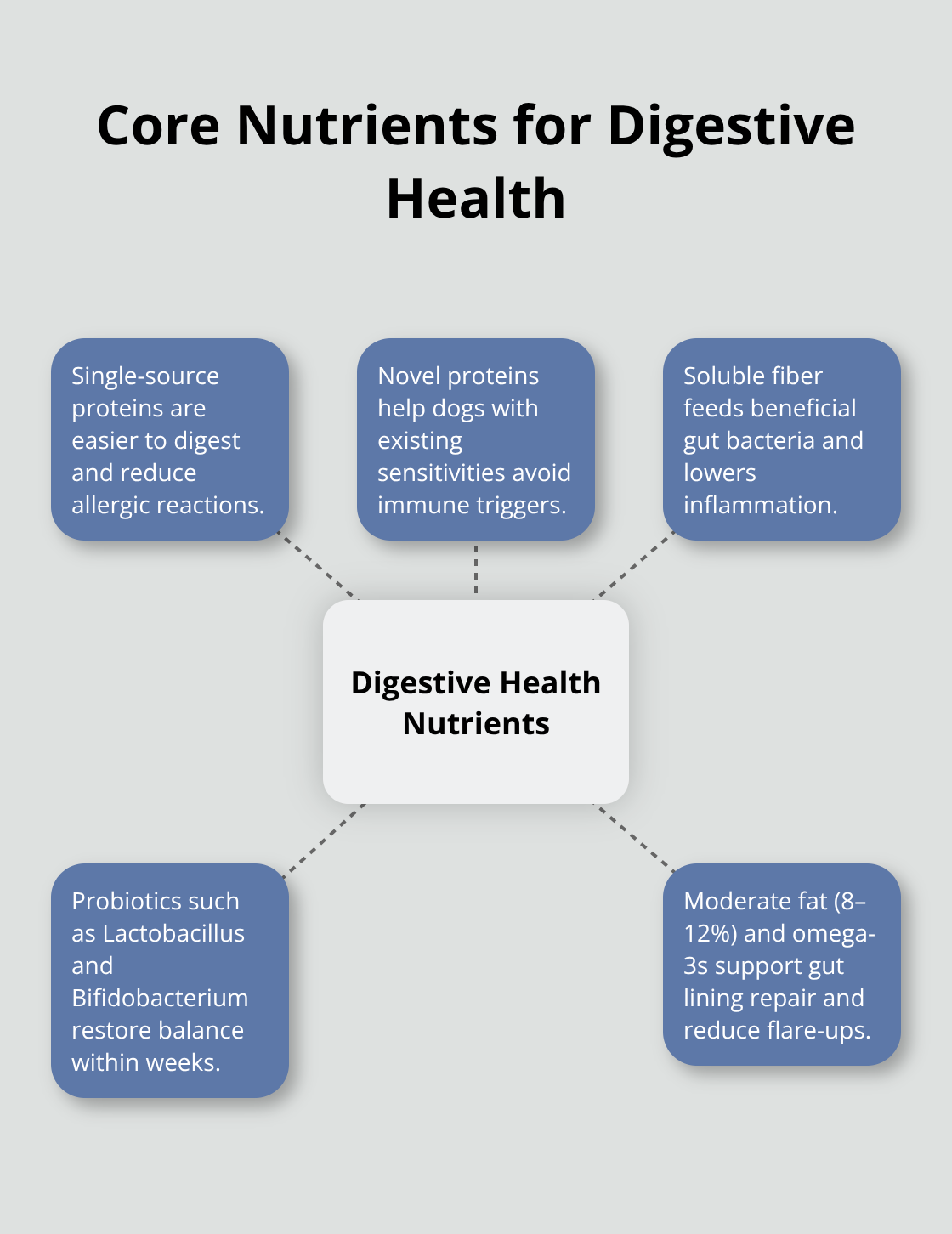
Protein sources that support sensitive stomachs focus on single proteins that dogs digest with ease. Turkey, lamb, and fish like salmon deliver complete amino acid profiles while they trigger fewer allergic reactions than chicken or beef. Novel proteins such as rabbit, venison, or duck work best for dogs with established food sensitivities because their immune systems haven’t developed reactions to these less common sources.
Hydrolyzed proteins (where molecules break down into smaller fragments) may contain proteins that stimulate helper T-lymphocytes and may not be effective for treating all dogs with food hypersensitivity.
Fiber Sources That Heal the Gut
Soluble fiber from sources like pumpkin, sweet potato, and beet pulp creates short-chain fatty acids that feed beneficial gut bacteria and reduce inflammation. Insoluble fiber from brown rice helps waste move through the digestive system efficiently without it causes irritation. Prebiotics include chicory root, Jerusalem artichoke, and fructooligosaccharides that feed probiotics already present in your dog’s intestines. Studies have shown that fiber intake is beneficial for digestion and overall gut health, with fiber-rich diets improving gastrointestinal function.
Probiotics That Restore Balance
Live probiotic cultures that include Lactobacillus acidophilus and Bifidobacterium animalis support digestive recovery within two to four weeks of consistent feed. Foods that contain at least 100 million colony-form units per serve provide therapeutic benefits for most dogs with digestive sensitivities. Bacillus coagulans survives stomach acid better than other probiotic strains, which makes it particularly effective for dogs with severe digestive issues. Multiple probiotic strains produce better results than single-strain supplements because different bacteria support various digestive functions throughout the intestinal tract.
Fat Content and Digestibility
Low to moderate fat levels (8-12%) work best for dogs with sensitive stomachs because high-fat foods can trigger pancreatitis episodes. Omega-3 fatty acids from fish oil reduce intestinal inflammation and support the gut lining repair process. Medium-chain triglycerides from coconut oil digest more easily than long-chain fats and provide quick energy without digestive stress.
These ingredient considerations form the foundation for evaluating specific dog food products and their labels.
Evaluating Dog Food Options
The AAFCO nutritional adequacy statement on dog food labels tells you whether the food meets minimum standards for your dog’s life stage, but this baseline doesn’t address digestive sensitivities. Look for foods that list a single, identifiable protein source as the first ingredient rather than generic terms like meat meal or poultry byproduct meal. The guaranteed analysis section shows minimum protein and fat percentages, but dogs with sensitive stomachs need fat levels between 8-12% and easily digestible proteins that appear in the top three ingredients. Foods labeled as complete and balanced through feeding trials rather than nutrient profiles provide better real-world digestibility data.
Limited Ingredient Diets Outperform Complex Formulas
Limited ingredient diets that contain 3-5 main components help you identify problem ingredients faster than traditional formulas with 20+ ingredients. Hill’s Prescription Diet i/d contains hydrolyzed protein and prebiotics specifically designed for digestive issues, while Royal Canin Digestive Care uses highly digestible proteins and balanced fiber levels. Wellness CORE Digestive Health includes probiotics and digestive enzymes that support gut bacteria restoration within four weeks of consistent feeding. Traditional multi-protein formulas increase the likelihood of triggering sensitivities because they expose your dog to multiple potential allergens simultaneously.
Harmful Ingredients That Damage Digestive Health
Artificial colors like Red 40 and Yellow 6 provide no nutritional value and can irritate sensitive intestinal linings in susceptible dogs. Corn, wheat, and soy act as common allergens and cheap fillers that many dogs struggle to digest properly. Foods that contain high fat levels can trigger digestive issues in dogs with sensitivities, making low fat formulas better choices for these animals. Byproduct meals from unspecified animals create inconsistent protein quality that can cause digestive upset when formulations change between batches.
Quality Indicators on Food Labels
Premium brands display feeding trial statements rather than just nutrient profile compliance, which demonstrates real-world testing with actual dogs. Manufacturers that employ veterinary nutritionists on their teams typically produce more scientifically formulated products for digestive health. The ingredient list reveals quality through specific protein sources (like deboned chicken) versus vague terms (like poultry meal).
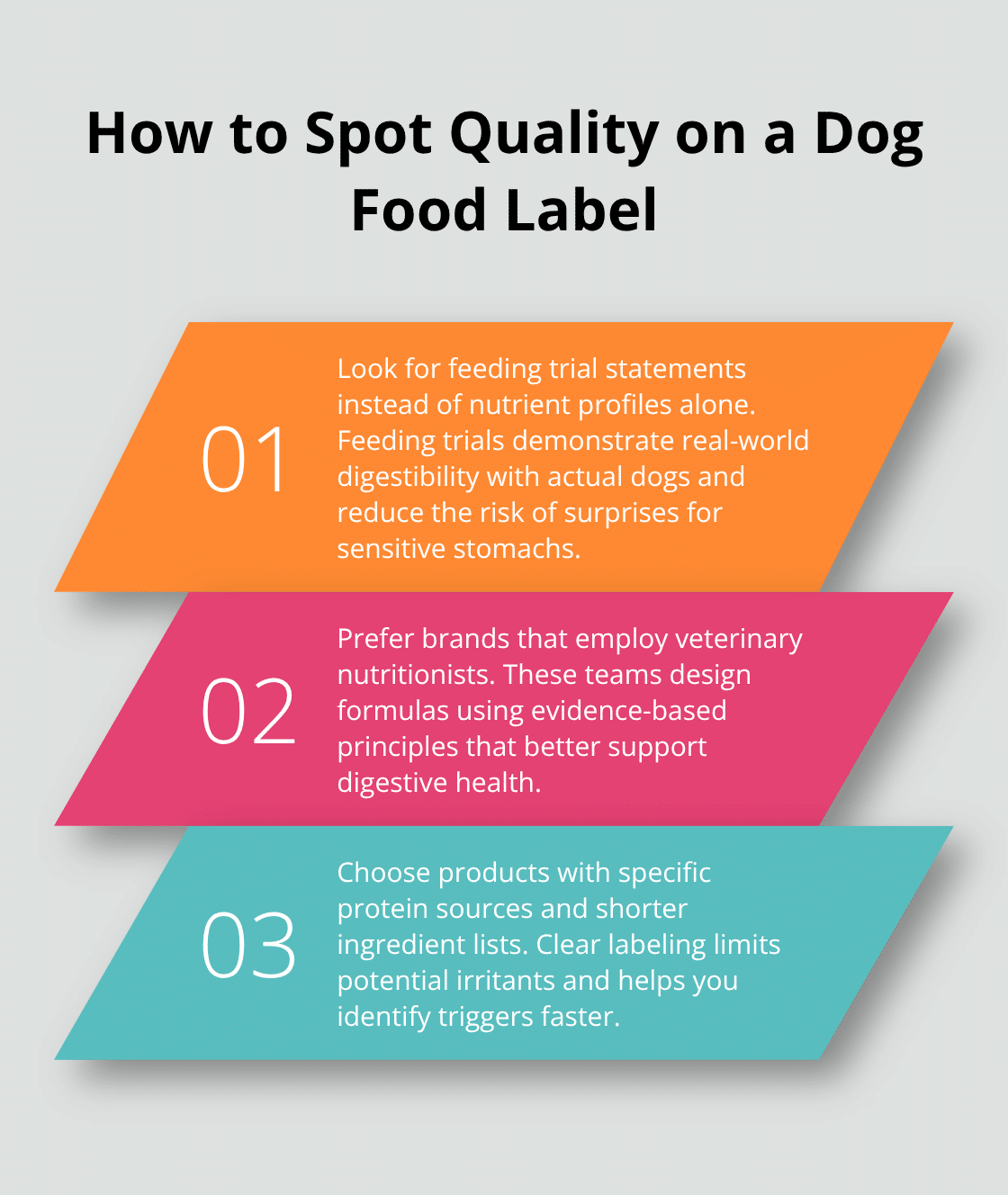
Foods with shorter ingredient lists often indicate higher quality components and fewer potential irritants for sensitive stomachs.
Final Thoughts
You need patience and systematic evaluation to select the right dog food for digestive care that meets your dog’s specific needs. Start with limited ingredient formulas that contain single protein sources and monitor your dog’s response over four to six weeks. Track stool consistency, energy levels, and appetite changes in a food journal to identify patterns and improvements.
Successful dietary transitions happen gradually over 7-10 days when you mix increased amounts of new food with decreased portions of the old formula. Dogs with sensitive stomachs show positive changes within two weeks when you feed them appropriate foods, which include firmer stools, reduced gas, and improved coat quality. Long-term digestive health prevents costly veterinary visits and improves your dog’s quality of life significantly.
Dogs on proper digestive diets maintain healthier weights, show increased activity levels, and experience fewer inflammatory episodes throughout their lives (the investment in quality nutrition pays dividends through reduced medical expenses and enhanced wellbeing). We at DogingtonPost provide comprehensive guides and expert advice to help you make informed decisions about canine nutrition. Visit DogingtonPost for more practical tips on canine nutrition and health management that support your dog’s digestive wellness journey.